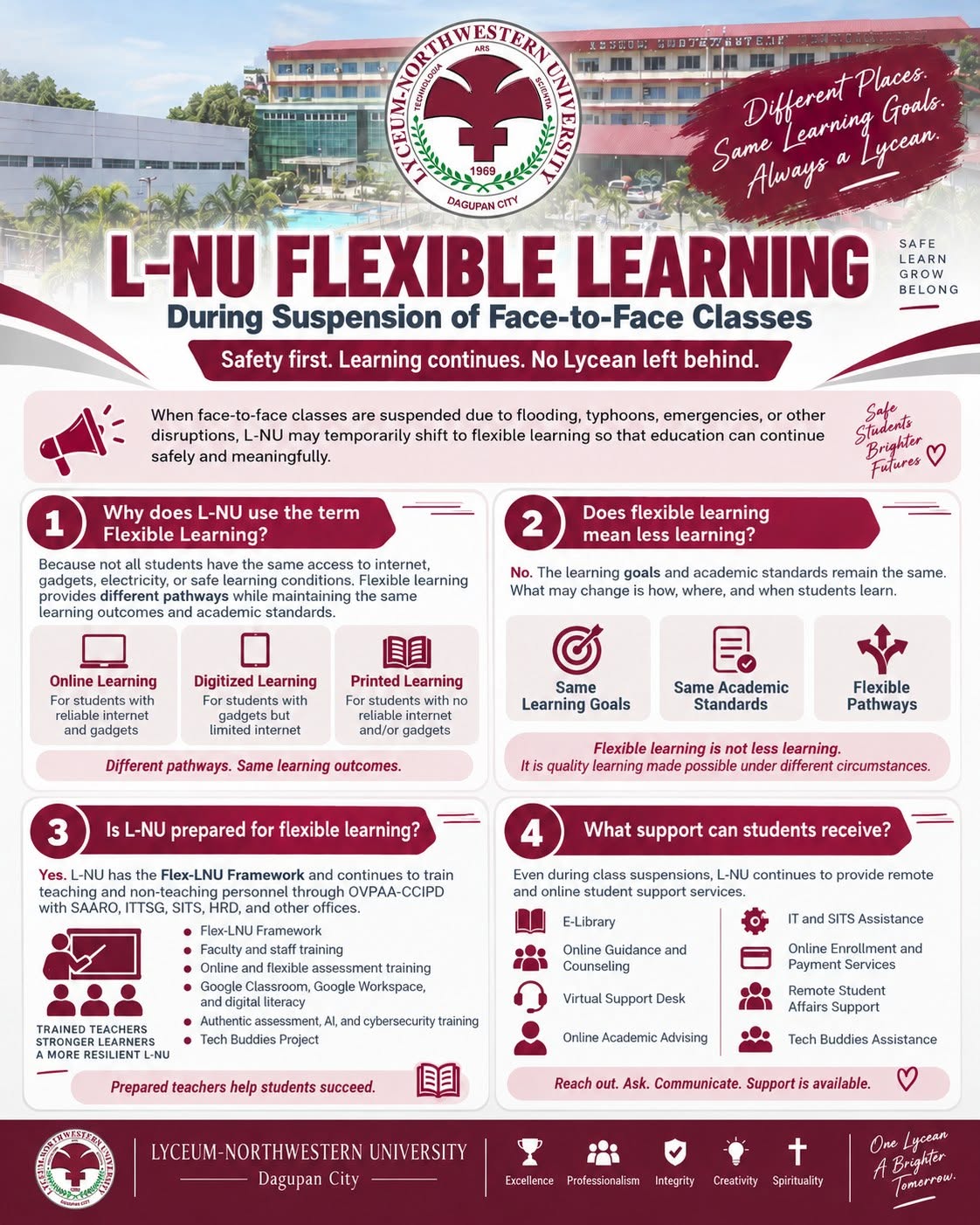
L-NU FLEXIBLE LEARNING DURING SUSPENSION OF FACE-TO-FACE CLASSES
When face-to-face classes are suspended, learning does not have to stop.
At Lyceum-Northwestern University, the safety and well-being of our students and personnel always come first. During periods when face-to-face classes cannot safely be conducted because of flooding, typhoons, severe weather conditions, emergencies, transportation difficulties, or other disruptions, the University may temporarily shift to flexible learning arrangements.
But what exactly does this mean?
Here are some of the most commonly asked questions from students and parents.
❓1. WHY DOES L-NU USE THE TERM “FLEXIBLE LEARNING” INSTEAD OF SIMPLY “ONLINE LEARNING” WHEN FACE-TO-FACE CLASSES ARE SUSPENDED?
Because flexible learning is broader, more inclusive, and more responsive than online learning alone.
When face-to-face classes are suspended, not all students experience the same situation.
Some may have:
🌐 reliable internet access
📱 gadgets and mobile data
⚡ uninterrupted electricity
But others may be dealing with:
🌧️ flooding in their communities
📶 weak or unavailable internet connection
⚡ power interruptions
📱 limited access to gadgets
🏠 evacuation or displacement
🚗 transportation difficulties
👨👩👧 responsibilities at home during an emergency
For this reason, requiring online learning alone may unintentionally disadvantage students who cannot remain connected to the internet.
Flexible learning recognizes these different circumstances.
During a suspension of face-to-face classes, students may be provided with different ways to continue learning depending on their access and situation:
💻 ONLINE LEARNING
For students with reliable internet access and appropriate gadgets. This may include online classes, consultations, discussions, learning activities, and assessments.
📱 DIGITIZED LEARNING
For students who have gadgets but may have limited or intermittent internet access. Learning materials may be downloaded, saved, or accessed offline so that students do not need to remain continuously connected.
📚 PRINTED LEARNING
For students who may not have reliable internet access or appropriate gadgets. Printed learning resources and activities may be used when appropriate and feasible.
Other appropriate arrangements may also be provided depending on the course, learning outcomes, and circumstances of the student.
Different circumstances. Different pathways. Same intended learning outcomes.
That is why L-NU uses the term flexible learning during face-to-face class suspensions: the goal is to continue education without assuming that every student has the same resources or circumstances.
❓2. DOES FLEXIBLE LEARNING DURING CLASS SUSPENSIONS MEAN STUDENTS WILL LEARN LESS?
No. Flexible learning does not mean lower standards, fewer lessons, or easier academic expectations.
When face-to-face classes are temporarily suspended, what changes is primarily the way learning is delivered—not the intended learning outcomes.
The Commission on Higher Education (CHED) describes flexible learning as a learner-centered approach that allows flexibility in time, place, pace, content, access, and assessment, depending on the needs and circumstances of learners (CHED, 2020).
In simpler terms:
📌 The learning goals remain.
📌 The academic standards remain.
📌 The responsibility to teach and learn remains.
📌 What may change is how, where, and when learning takes place.
The University of the Philippines Open University (UPOU) likewise emphasizes that flexible learning should promote not only access to education but also meaningful learning outcomes. Flexibility may involve changes in the pace, place, and mode of learning, while still ensuring that students develop the expected knowledge, skills, and competencies (UPOU, 2021).
Research also shows that learning conducted outside the traditional classroom is not automatically less effective.
A major review commissioned by the U.S. Department of Education found that students in well-designed online learning environments performed, on average, as well as—and in some circumstances better than—students receiving purely face-to-face instruction (Means et al., 2010).
A systematic review of blended learning in higher education similarly found that students could achieve comparable learning outcomes even when classroom time was substantially reduced, provided that learning activities were appropriately designed and supported (Müller & Mildenberger, 2021).
Another large-scale review covering 841 studies also reported favorable outcomes for distance and online learning, particularly in higher education (Martin et al., 2022).
So during a class suspension, the question should not simply be:
“Are students physically inside the classroom?”
The more important questions are:
Are students still learning?
Are teachers providing meaningful instruction?
Are learning outcomes being achieved?
Are students receiving appropriate support?
Quality learning depends on the quality of teaching, interaction, learning activities, assessment, feedback, resources, faculty preparation, and student support—not merely on physical presence inside a classroom.
During temporary flexible learning arrangements, students may therefore engage in:
💻 Online discussions and consultations
📚 Guided and independent learning activities
📝 Case analyses and authentic assessments
🎥 Recorded lessons and presentations
👥 Collaborative activities
🧪 Simulations and performance-based activities
📱 Digital or downloadable learning resources
📖 Printed learning materials when necessary
⏰ Reasonable flexibility in schedules and deadlines when circumstances require it
At L-NU:
Flexible learning during a class suspension is not about expecting less from students. It is about finding safe, appropriate, and equitable ways for students to continue learning.
❓3. DOES L-NU HAVE ITS OWN FRAMEWORK TO GUIDE FLEXIBLE LEARNING?
YES. ✅
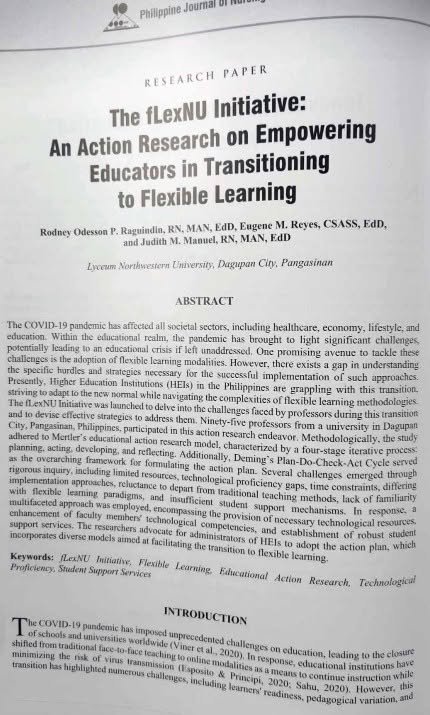
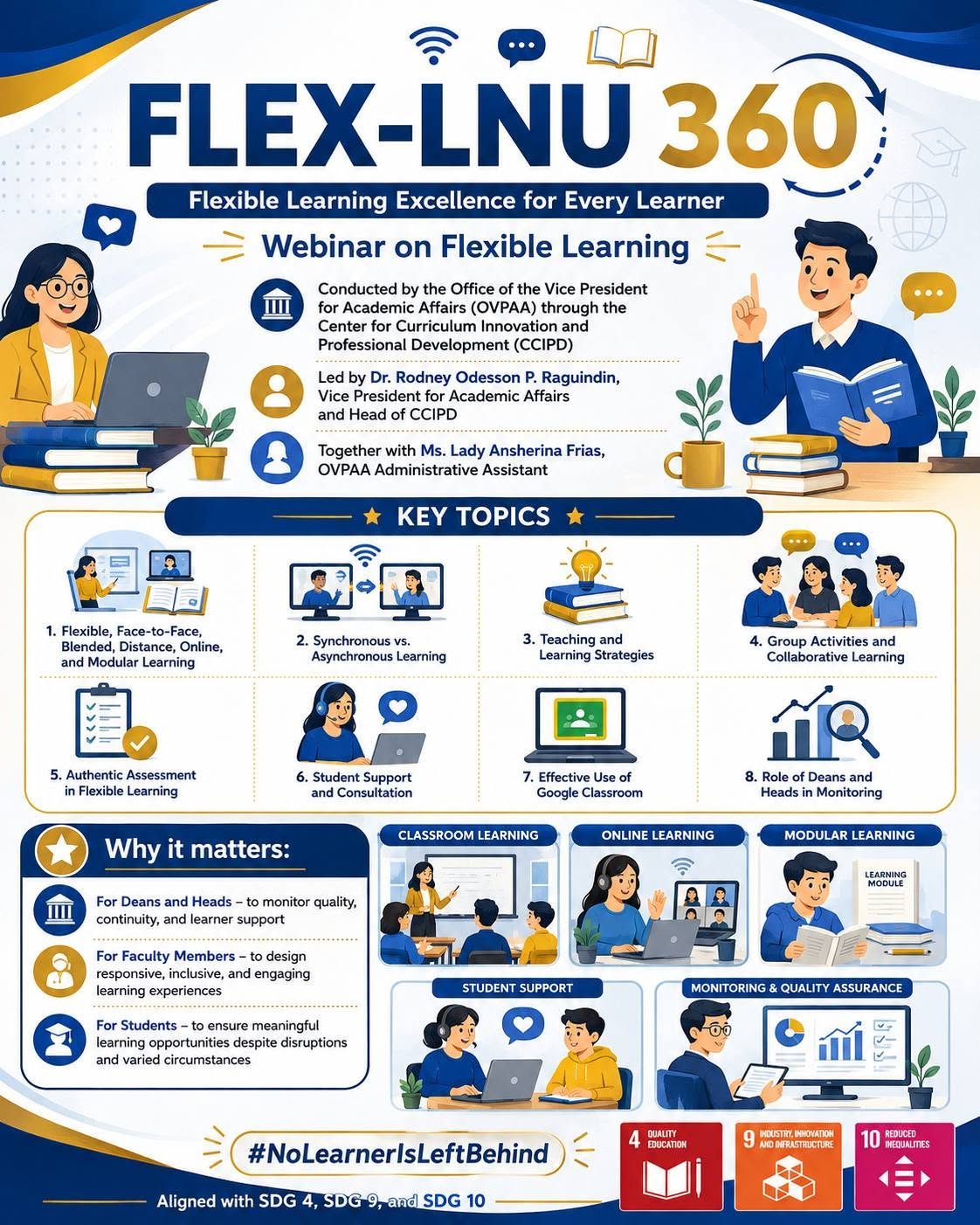
L-NU developed the Flex-LNU Framework to guide the University’s implementation of flexible, learner-centered, and responsive education.
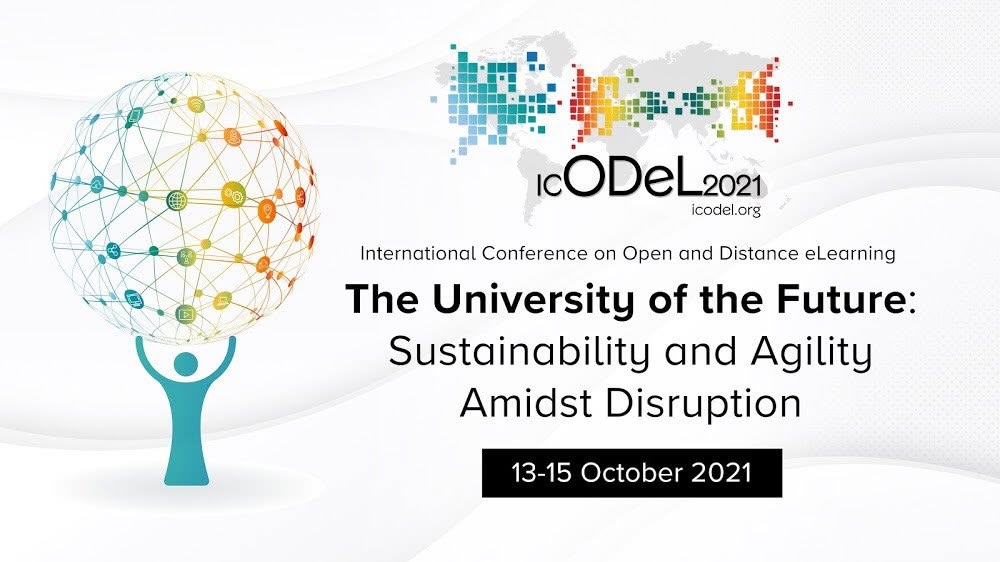
The framework was presented in a 2021 conference on International Conference on Open and Distance e-Learning (ICODeL) and was also published in the 2022 issue of the Philippine Journal of Nursing Education, the journal of the Association of Deans of Philippine Colleges of Nursing, Inc. (ADPCN).
This is particularly important during emergencies and suspensions of face-to-face classes.
It means that L-NU’s use of flexible learning is not simply an improvised response whenever classes are disrupted.
It is supported by:
✅ an institutional framework
✅ research and scholarship
✅ faculty development
✅ student-support mechanisms
✅ technology and learning resources
✅ continuous evaluation and improvement
L-NU’s commitment to innovative and inclusive student support has also received international recognition.
In the World University Rankings for Innovation (WURI) 2024, L-NU achieved Rank 22 worldwide in Student Support and Engagement for PROMISE—Project for Resilience, Opportunities, Mentorship, Inclusion, and Student Empowerment: Ensuring That No Learner or Teacher is Left Behind.
This reflects an important principle that becomes even more meaningful during emergencies:
💙 A disruption in face-to-face classes should not automatically become a disruption in a student’s opportunity to learn.
❓4. ARE L-NU TEACHERS AND PERSONNEL PREPARED FOR FLEXIBLE LEARNING DURING CLASS SUSPENSIONS?
YES—and training is continuously provided. 👩🏫💻
Shifting temporarily from face-to-face instruction to flexible learning requires much more than simply asking teachers to conduct an online class.
Faculty members need to know how to:
✅ select appropriate learning modalities
✅ design activities for online, digitized, and printed learning
✅ communicate effectively with students remotely
✅ conduct meaningful and fair assessments
✅ provide reasonable accommodations when students are affected by emergencies
✅ maintain academic integrity
✅ use digital platforms responsibly
✅ provide feedback and consultations
✅ recognize that students may have different levels of connectivity and access
Over the years, the Office of the Vice President for Academic Affairs–Center for Curriculum Innovation and Professional Development (OVPAA-CCIPD), together with the Student Affairs and Alumni Relations Office (SAARO), Information Technology Technical Support Group (ITTSG), Student Information Technology System (SITS), Human Resource Development Office (HRD), and other University offices, has continuously provided training and support to teaching and non-teaching personnel.
These include:
✅ Flexible Learning training and retraining
✅ Online and Flexible Assessment training
✅ Online and Remote Student Support Services training
✅ Google Classroom and digital assessment training
✅ Google Workspace training
✅ Digital literacy programs
✅ Authentic Assessment and Academic Integrity training
✅ Generative AI and Cybersecurity training
✅ IGNITE – Innovative and Generative AI Training for Educators
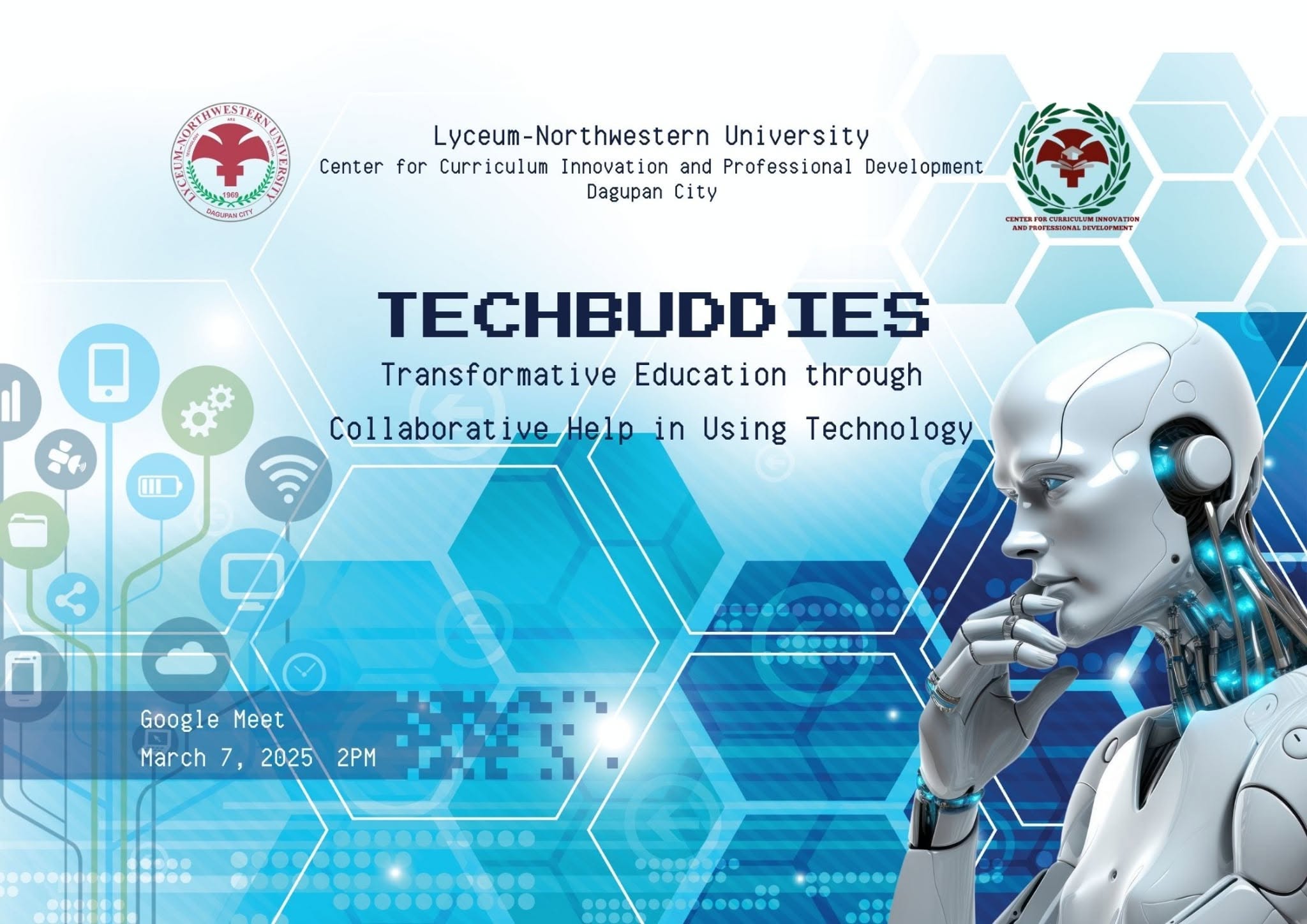
✅ TECH BUDDIES PROJECT
👨💻 WHAT IS TECH BUDDIES?
Tech Buddies is an L-NU initiative that provides continuing technological and peer support to faculty members.
During periods when classes suddenly need to shift away from face-to-face instruction, this kind of support becomes particularly important.
Its principle is simple:
No teacher should be left struggling with technology when assistance can be provided.
Because when our teachers are supported and prepared, our students are better supported too.
❓5. WHAT SUPPORT CAN STUDENTS RECEIVE WHILE FACE-TO-FACE CLASSES ARE SUSPENDED?
A LOT. 💙
The suspension of face-to-face classes should not mean the suspension of student support.
Even when students cannot safely come to campus, L-NU continues to make many academic and student services accessible through remote and online mechanisms.
These include:
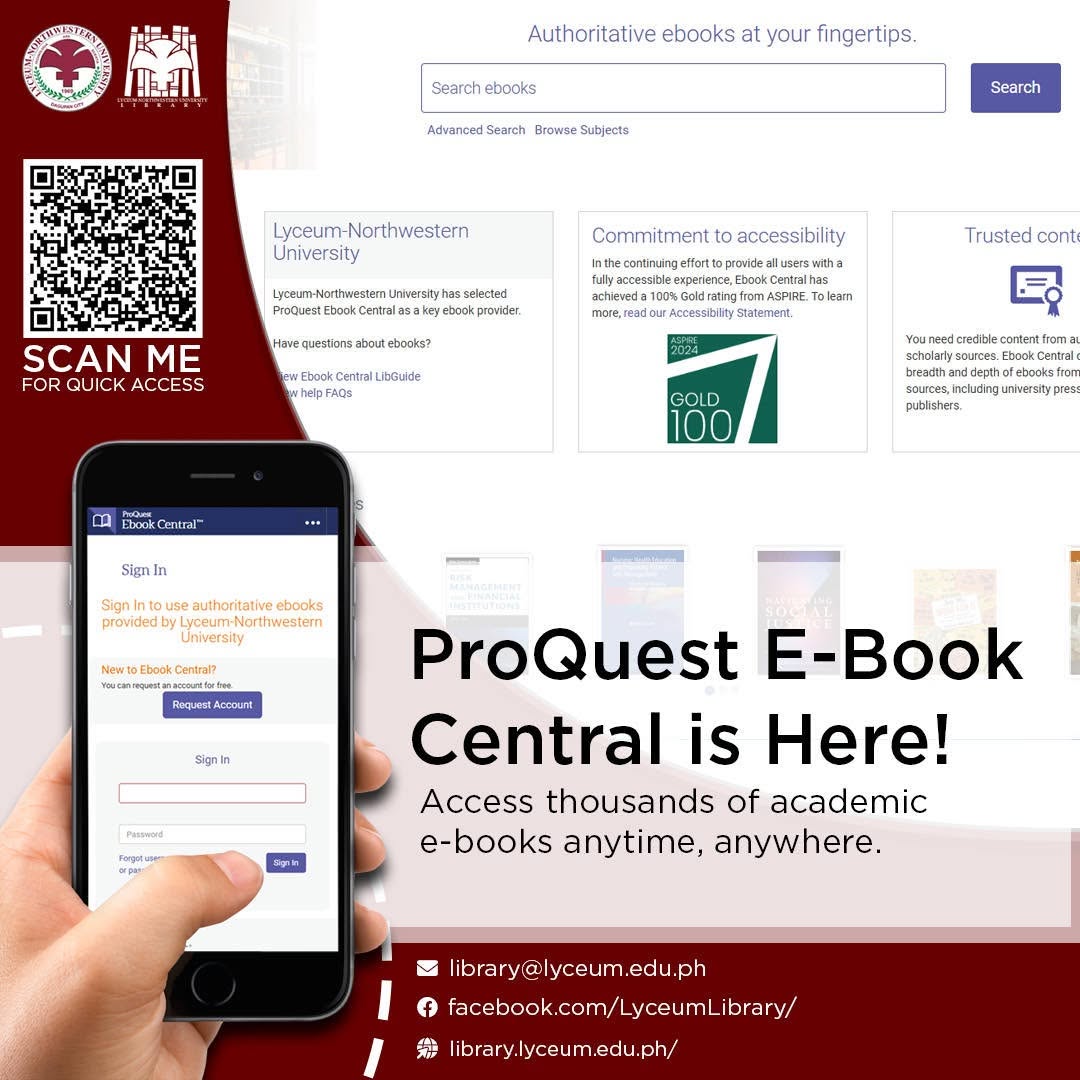
📚 Electronic Library and online learning resources
🧭 Online Guidance and Counseling services
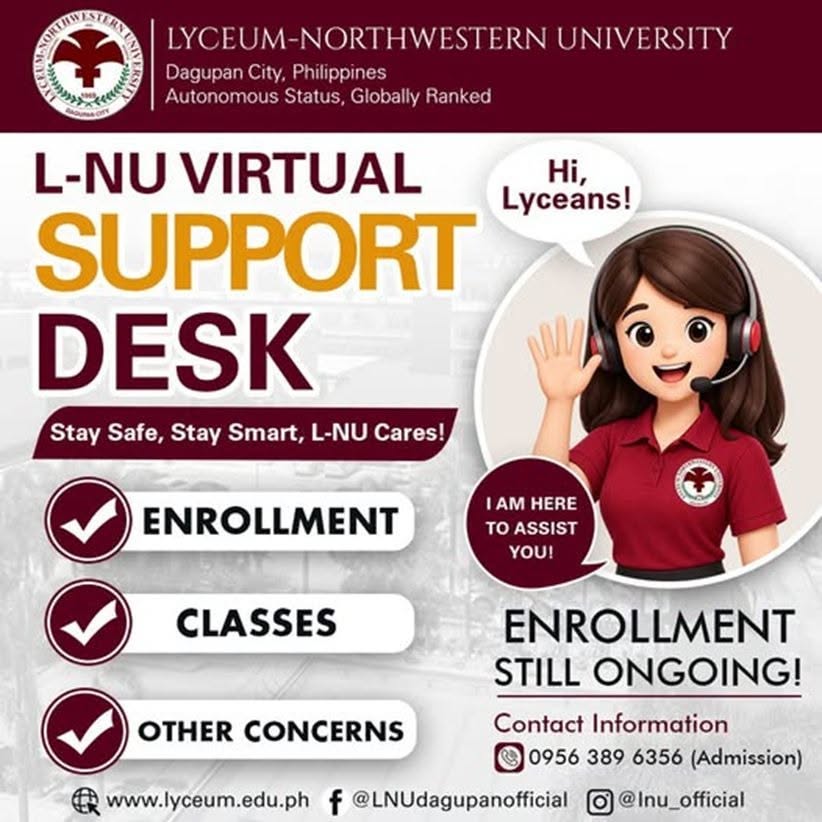
💻 Virtual Support Desk, where students may communicate with academic and non-academic offices
🎓 Online academic advising and consultation
🖥️ IT assistance
💳 Online enrollment and payment services
🤝 Remote student affairs and support services
👨💻 Tech Buddies and technology-related assistance
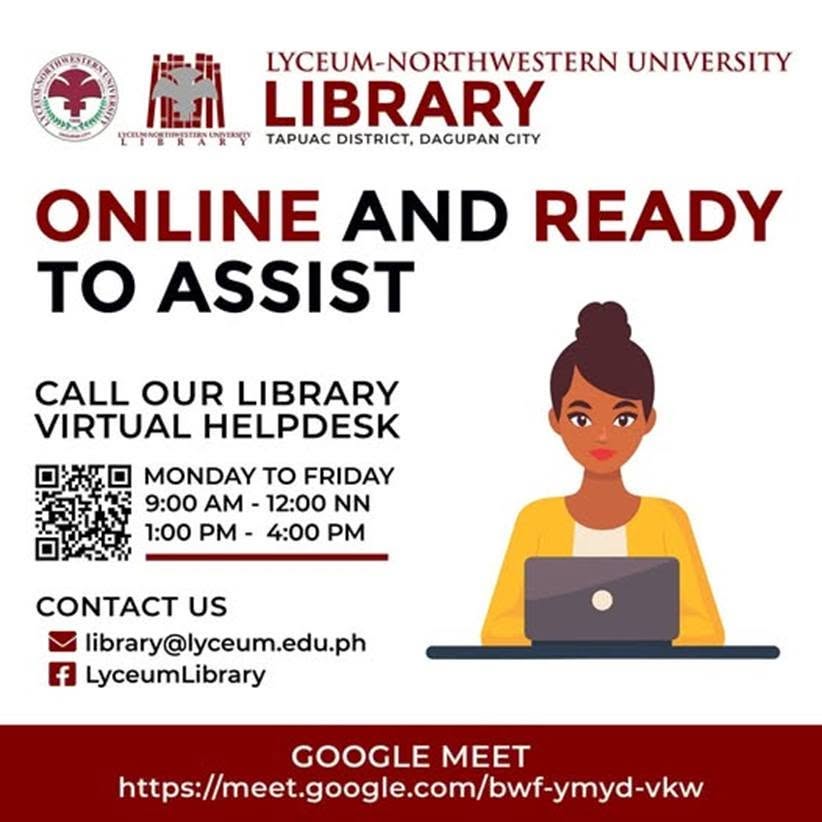
Through the Virtual Support Desk, students may seek assistance from different academic programs and University offices, including Guidance, Library, SITS, Student Affairs, Admissions, and other support units.
Students who experience difficulties because of flooding, power interruptions, internet problems, transportation issues, evacuation, or other emergency-related circumstances are encouraged to communicate with their instructors and academic units.
Students using digitized or printed learning resources may likewise coordinate regarding:
📚 access to learning materials
📝 submission of requirements
⏰ schedules and deadlines
💬 consultations
📶 connectivity concerns
🧭 other learning-related difficulties
The important message to every Lycean is:
💙 You are not expected to face these challenges alone.
Reach out. Ask. Communicate. Support is available.
💡 SO, WHAT DOES FLEXIBLE LEARNING MEAN DURING A SUSPENSION OF FACE-TO-FACE CLASSES?
It means that safety comes first—but learning can still continue.
It means that when students and teachers cannot safely meet on campus, the University provides alternative pathways for learning.
It means recognizing that one student may have stable internet while another may be experiencing flooding, power interruption, weak connectivity, or displacement.
It means that fairness does not always mean giving everyone exactly the same arrangement. Sometimes fairness means providing appropriate options according to students’ circumstances while working toward the same learning outcomes.
It means providing online, digitized, printed, and other appropriate learning arrangements when needed.
It means combining:
🎯 Quality
🤝 Flexibility
⚖️ Equity
💙 Compassion
📚 Responsibility
✅ Accountability
And most importantly:
FLEXIBLE LEARNING IS NOT “LESS LEARNING.”
It is:
📚 Learning with purpose.
💻 Learning through different pathways.
🤝 Learning with support.
🎯 Learning toward the same intended outcomes.
💙 Learning that recognizes the realities of every student.
At Lyceum-Northwestern University, flexible learning during the suspension of face-to-face classes is not simply about continuing lessons.
It is about protecting our students while protecting their opportunity to learn.
When circumstances make physical classes unsafe, we adapt.
When students encounter barriers, we provide options.
When challenges arise, we continue to support one another.
💙 Because at L-NU: Safety comes first. Learning continues. No Lycean is left behind.
Whatever the modality—online, digitized, printed, or another appropriate arrangement—our commitment remains the same: Quality Education. Meaningful Learning. Every Lycean Supported.